Meet Xavier
For a responsible marine wildlife-watching experience, discovering Réunion’s marine megafauna.
For a responsible marine wildlife-watching experience, discovering Réunion’s marine megafauna.
The meeting point of all the elements.
When my dad came to visit a few years ago, we went on a brilliant trip to spot dolphins and then whales. As we were heading back to the harbour, some friends told me that the volcano had erupted… So off we went to see the eruption, which was particularly clearly visible from the Pas de Belcombe-Jacob… Two once-in-a-lifetime experiences in a single day.
The Sec Jaune at Pointe au Sel.
Marine wildlife.
Rougail with sausage, but served with pasta and grated cheese.
Red Hot Chili Peppers.
Off the coast of Saint-Gilles, in the west of Réunion, I’m about to embark on a unique experience at sea. Here, there’s no guarantee of spotting any particular creatures, but rather a true immersion in the world of Réunion’s marine megafauna, guided by curiosity, patience and, above all, an appreciation for the living world of the Indian Ocean. With the Scubananas diving club, I’m about to spend a morning where science blends with emotion.
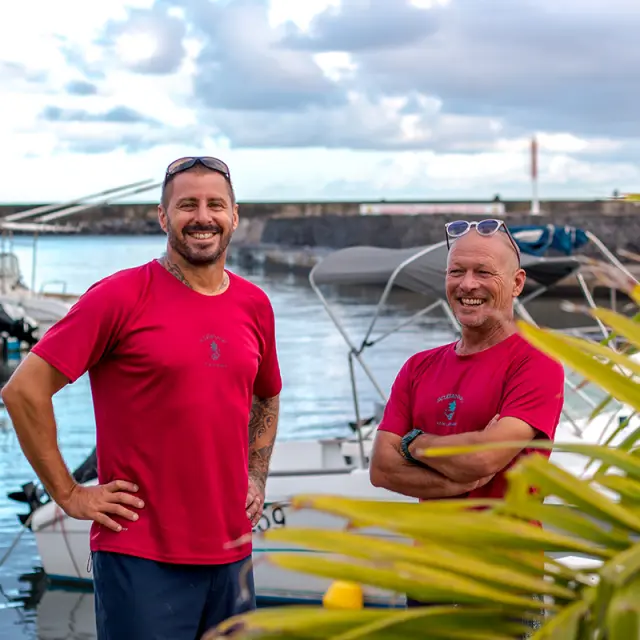
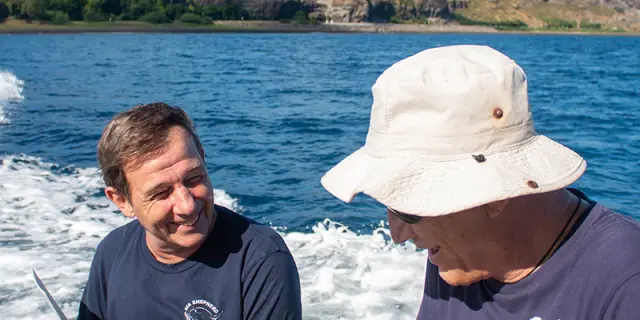
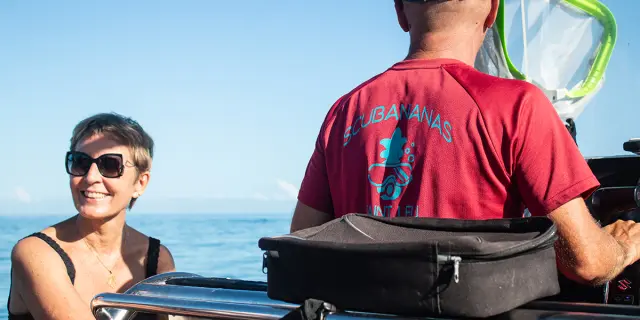
It is 7.30 am when I arrive at the port of Saint-Gilles, opposite the aquarium. The group is gradually gathering, in a calm and attentive atmosphere. I meet Xavier and Ludovic, our guides, accompanied by two scientists who have come to collect data on the species observed at sea.
Very quickly, the spirit of the trip becomes clear: here, we don’t just come to ‘look for’ dolphins or whales, but to learn to observe the sea in a different way, with total respect for the wildlife. It’s a clear philosophy, where every time we take to the water, every encounter with a dolphin, whale, turtle, ray… or any other species becomes a privilege, never something to be taken for granted.
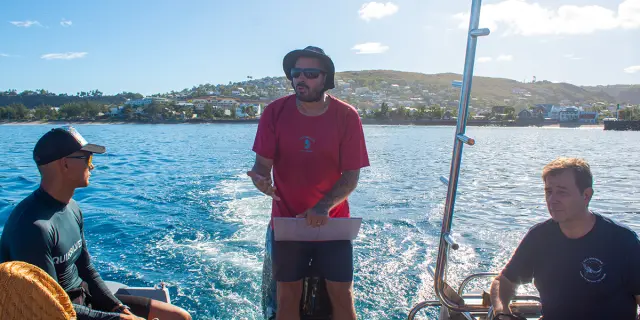
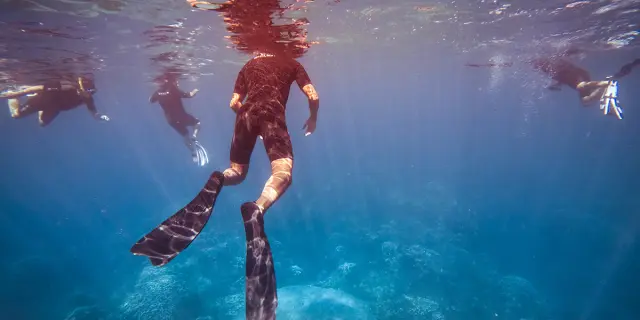
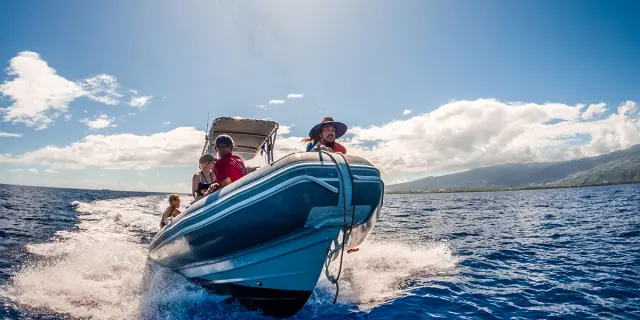
Once we’re fully kitted out – with fins, masks, snorkels and wetsuits – we board the boat. Once out at sea, Xavier explains the plan for the morning. A log sheet is passed round: we’ll need to note down the species we encounter, their approximate numbers and the GPS coordinates of the sighting. This data forms part of a citizen science project on marine life in Réunion’s waters.
As a pioneer of the SWIMM project, Scubananas turns every trip out to sea into a participatory adventure where visitors, professionals and scientists work together to gain a better understanding of and protect Réunion’s marine megafauna.
We have also been sent a document detailing the incredible diversity of Réunion’s marine megafauna: cetaceans, sea turtles, sharks and rays, as well as seabirds such as noddies, shearwaters, Barau’s petrels and the majestic white-tailed tropicbirds.
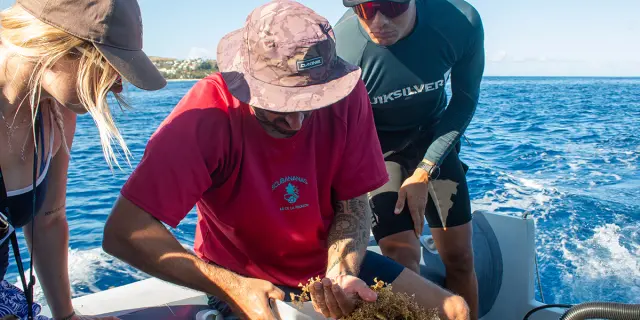
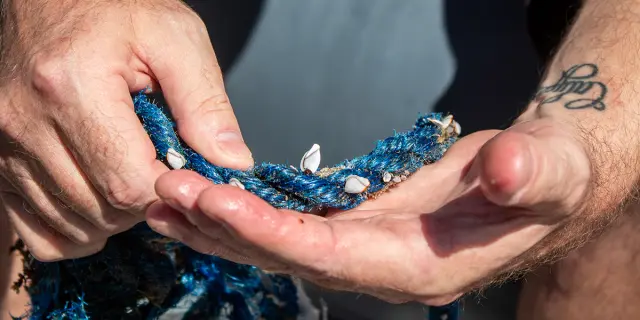
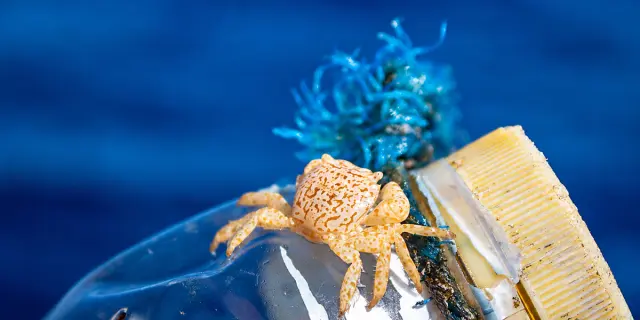
We set off. I spot some flying fish and make a careful note of them. Further on, clumps of sargassum are drifting on the surface. We collect a few to observe the life they harbour: tiny crabs, camouflaged fish… a world invisible to the naked eye that I would never have imagined existed.
Throughout the trip, the guides remind visitors of the essential rules of respect: keeping your distance, staying quiet, and observing without interacting. This approach reflects a widely held belief here: at sea, we are guests, never owners.
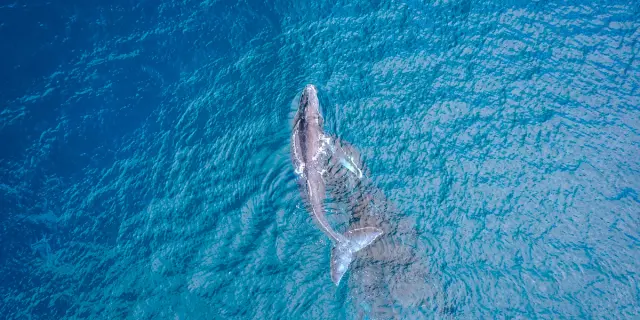
It’s whale-watching season (June to September) and I’m lucky enough to be enjoying this unforgettable spectacle. Not just from the boat, but also whilst in the water… I swim as quietly as possible so as not to disturb this small group of whales. I’m lost for words – it’s so beautiful. Once back on dry land, Xavier emphasises just how rare this moment is. For the past two years, the whales have been sighted less frequently, and this is precisely what the SWIMM project aims to convey: that a successful outing doesn’t just depend on the presence of a whale or a dolphin, but on learning to observe differently, to marvel at a behaviour, a bird, a turtle… to respect the distance and even to accept the absence of an animal.
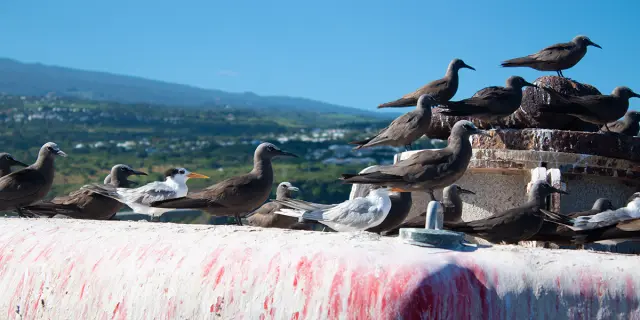
And the magic unfolds in a different way. We spot several black-tailed tropicbirds, then an impressive gathering of noddies and shearwaters perched on a buoy out at sea.
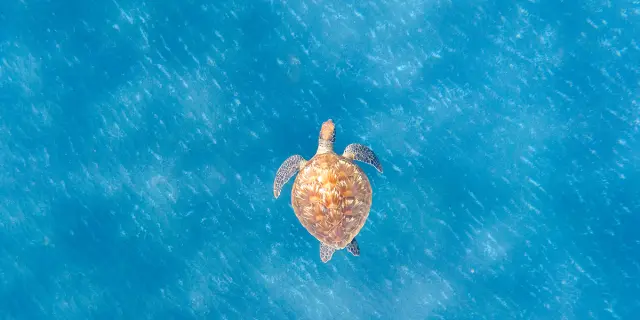
As we set off for a second time, silence descends. Beneath the surface, I discover a teeming world of life. One after the other, two hawksbill turtles emerge. Majestic, serene. We watch them from a distance, without following or disturbing them, respecting their space in line with the awareness guidelines put in place by the team. Watching these turtles glide through the water, I clearly experience a magical moment.
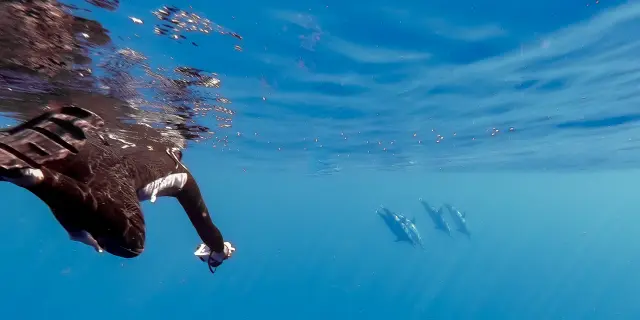
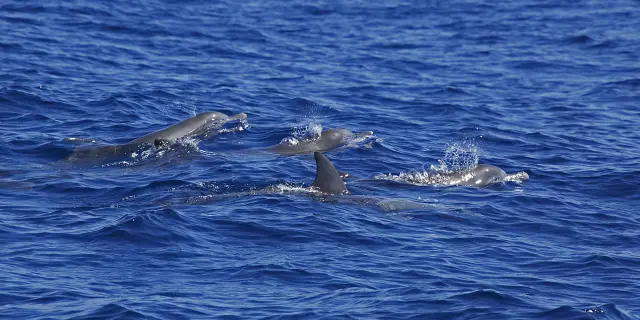
After a morning full of discoveries, the sea had one last surprise in store for us: a pod of around ten dolphins crossed our path. In keeping with the principles of responsible observation that had guided us throughout the trip, we watched them from a distance before letting them go on their way undisturbed. It was a quiet encounter, but one that left a lasting impression.
As the hours go by, Xavier and Ludovic share their knowledge of Réunion’s marine ecosystem. Every question is answered, and every observation becomes a living lesson. The sea becomes an open book, where every page tells a different story.
Then, something unexpected happened: we spotted a Barau’s petrel on the surface of the water. As a vulnerable species, it cannot survive on its own if it falls into the sea. Without hesitation, we carried out a rescue and took the bird to the Saint-Gilles Aquarium, which is authorised to take in birds in distress. It was a deeply moving experience, serving as a reminder of the fragility of this natural balance.
Back at the harbour after more than three hours at sea, I realise just how much more this experience is than a simple boat trip. It’s not just a matter of getting out on the water, but a genuine immersion in understanding living things.
This morning gave me a new perspective on the ocean: one that was slower, more mindful and more humble. Through this respectful approach to Réunion’s marine megafauna, I discovered a different way of travelling at sea, based on observation, science and respect for all living things.
A powerful experience, which serves as a reminder that every encounter with the marine world is a privilege worth preserving. At the end of the trip, I extend this unique morning with a lunch break overlooking the sea, delighted by my encounters with marine life and returning home a little more aware of the challenges facing marine conservation.
Megafaune Marine Web Irt@zecaillou Exp Mai2036 25
|
Megafaune Marine Web Irt@zecaillou Exp Mai2036 10
|
Megafaune Marine Web Irt@zecaillou Exp Mai2036 13
|
Megafaune Marine Web Irt@zecaillou Exp Mai2036 15
|
Megafaune Marine Web Irt@zecaillou Exp Mai2036 11
|
Megafaune Marine Web Irt@zecaillou Exp Mai2036 16
|
Megafaune Marine Web Irt@zecaillou Exp Mai2036 17
|
Rencontre Avec Les Dauphins 7 Irt@travels Gallery Dt 2030
|
Megafaune Marine Web Irt@zecaillou Exp Mai2036 3
|
Megafaune Marine Web Irt@zecaillou Exp Mai2036 19
|
Megafaune Marine Web Irt@zecaillou Exp Mai2036 5
|
Megafaune Marine Web Irt@zecaillou Exp Mai2036 21
|
Cetaces25 Credit Irt Serge Marizy
|
Megafaune Marine Web Irt@zecaillou Exp Mai2036 25
|
Megafaune Marine Web Irt@zecaillou Exp Mai2036 10
|
Megafaune Marine Web Irt@zecaillou Exp Mai2036 13
|
Megafaune Marine Web Irt@zecaillou Exp Mai2036 15
|
Megafaune Marine Web Irt@zecaillou Exp Mai2036 11
|
Megafaune Marine Web Irt@zecaillou Exp Mai2036 16
|
Megafaune Marine Web Irt@zecaillou Exp Mai2036 17
|
Rencontre Avec Les Dauphins 7 Irt@travels Gallery Dt 2030
|
Megafaune Marine Web Irt@zecaillou Exp Mai2036 3
|
Megafaune Marine Web Irt@zecaillou Exp Mai2036 19
|
Megafaune Marine Web Irt@zecaillou Exp Mai2036 5
|
Megafaune Marine Web Irt@zecaillou Exp Mai2036 21
|
Cetaces25 Credit Irt Serge Marizy
|


From 1 October 2025 to 31 June 2026
Ages 8 and over: €95 per person
From 1 July 2026 to 31 September 2026 (Whale Season)
Ages 8 and over: €135 per person