Moka de Palmas: The Deer of Les Hauts de Sainte-Marie

Les Hauts

In Les Hauts de Sainte-Marie, Yannick de Palmas raises nearly 400 deer in the open air on rolling pastures overlooking the Indian Ocean. This family-run operation is unique in Réunion and is guided by a vision that respects all living things.

All it takes is to climb a few kilometers above Roland Garros Airport for scenery to change dramatically. Below, the cars, the city, the runways, and the constant comings and goings of the island’s northern region. Then the road rises toward the Hauts de Sainte-Marie. The landscape becomes more rugged, the air grows cooler, and the scents change.

Upon arrival, there’s that striking scent of lemon eucalyptus, mingled with the drier notes of camphor and pink peppercorns.

Then the meadows come into view. Vast, rolling, sometimes shrouded in mist. And when the sky clears, the Indian Ocean appears below.

You wouldn’t expect to find such a landscape here. Much less to discover a deer ranch.
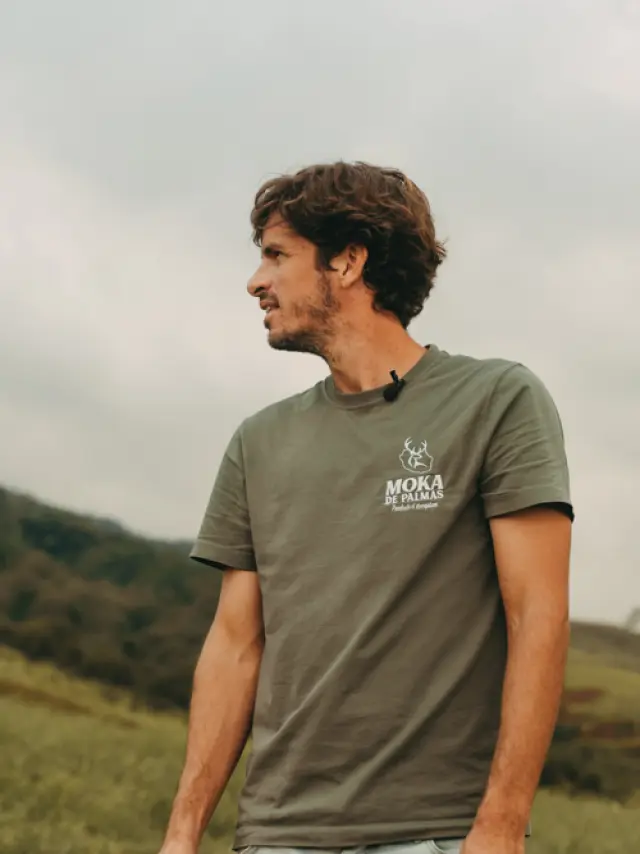
“Coming back to Moka was a no-brainer.”

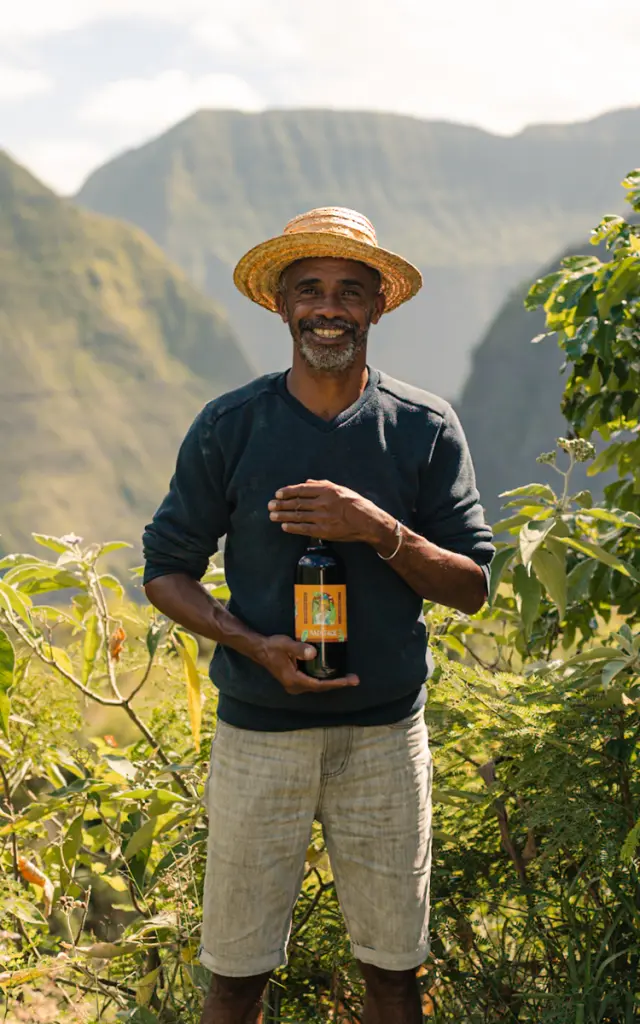
Amid these wide-open spaces is Yannick de Palmas.

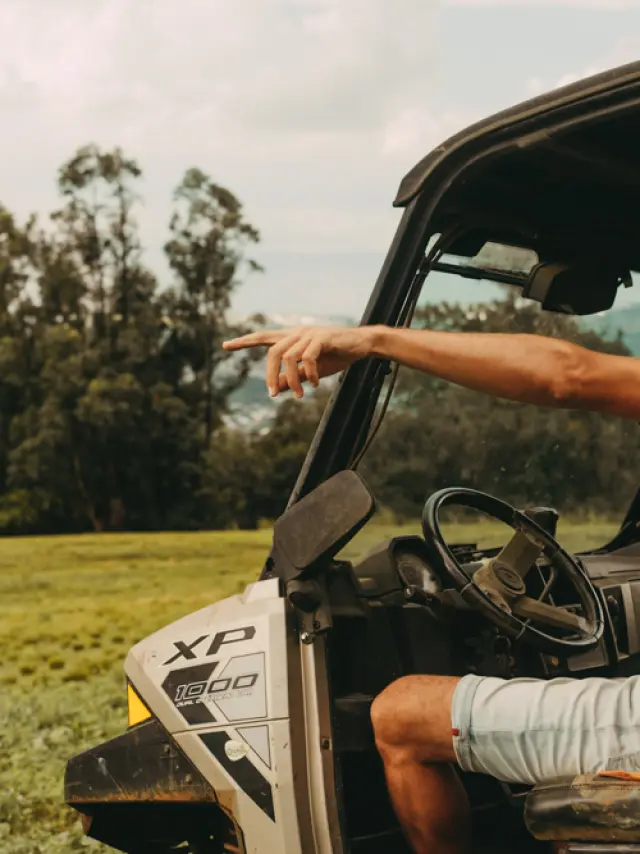
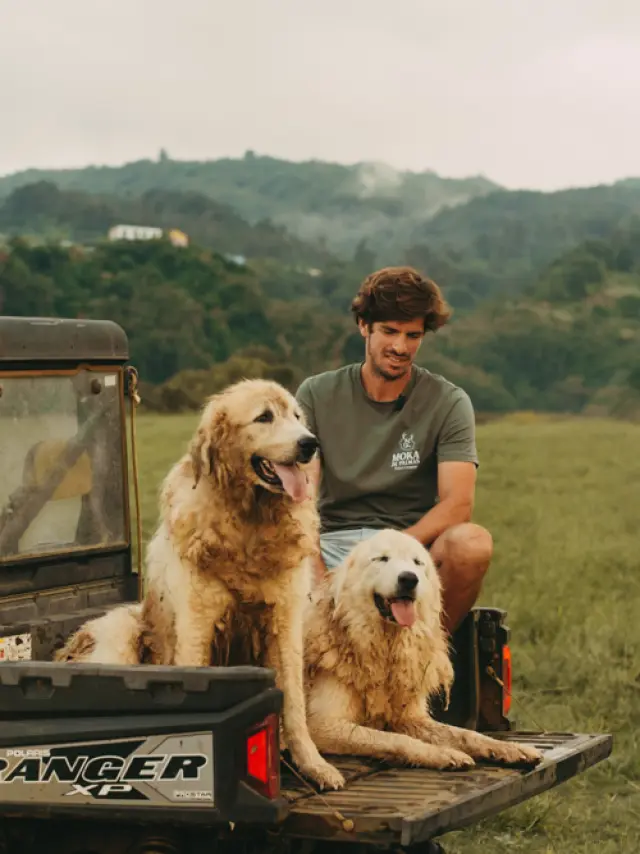
With a big smile, he’s always on the move, often behind the wheel of his buggy with his three “Pyrenean mountains” in the back, and his eyes are always fixed on the herd. He doesn’t say much to make a big deal out of things. But when he talks about his animals or the lands of Moka, you immediately sense the deep bond that ties him to the place.

He grew up here, outdoors. At home, there was no television. His days were spent following his father around the farm, repairing fences, watching the animals, or simply gazing at the clouds drifting across the slopes.

For him, farm life was never something he learned from books. It was passed down through presence. Through habit. Through observation.

After studying accounting and management in mainland France, Yannick returned with one thing clear in his mind : understanding a business, yes. Living cooped up in an office, no.

“Coming back to Moka was a no-brainer.”

Deer roaming free in the island’s highlands

Deer, on Réunion. The idea always comes as a surprise.

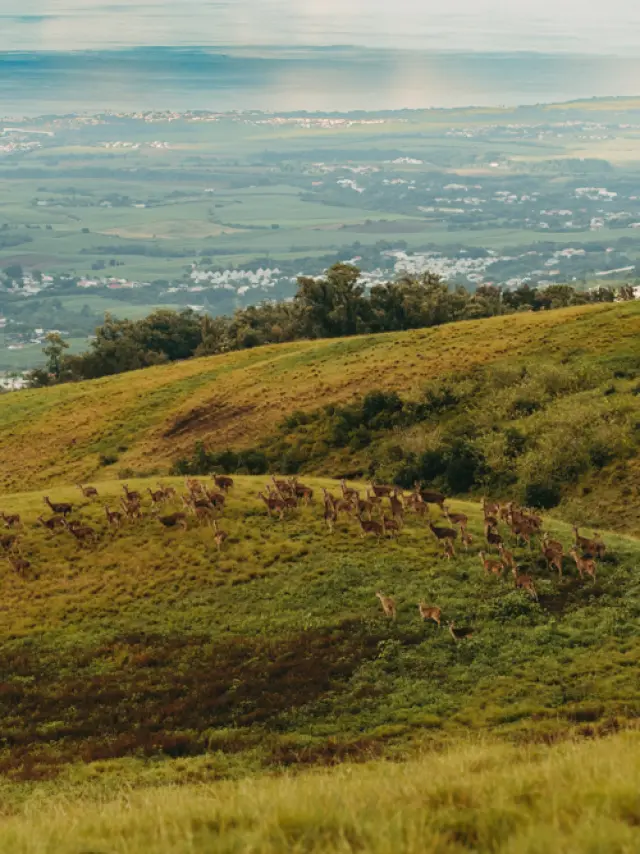
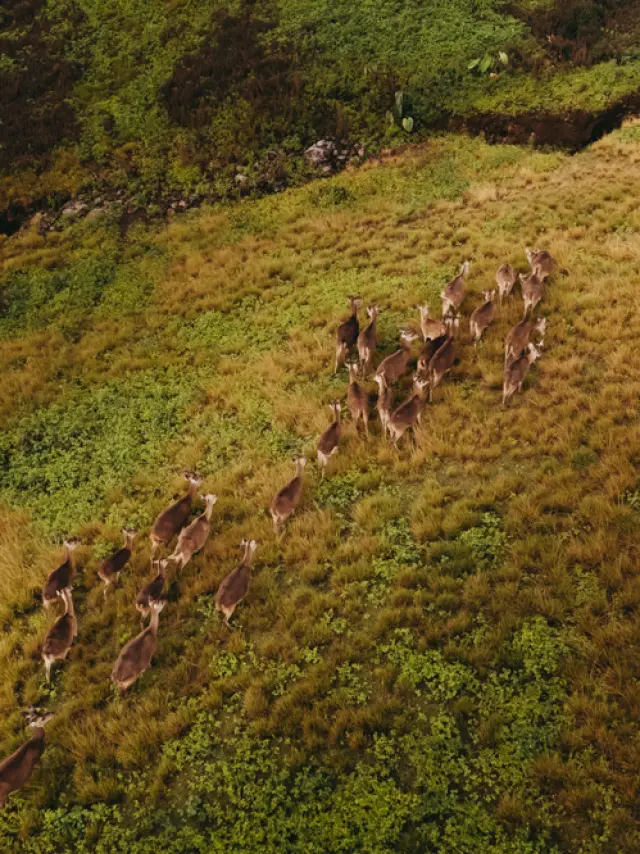
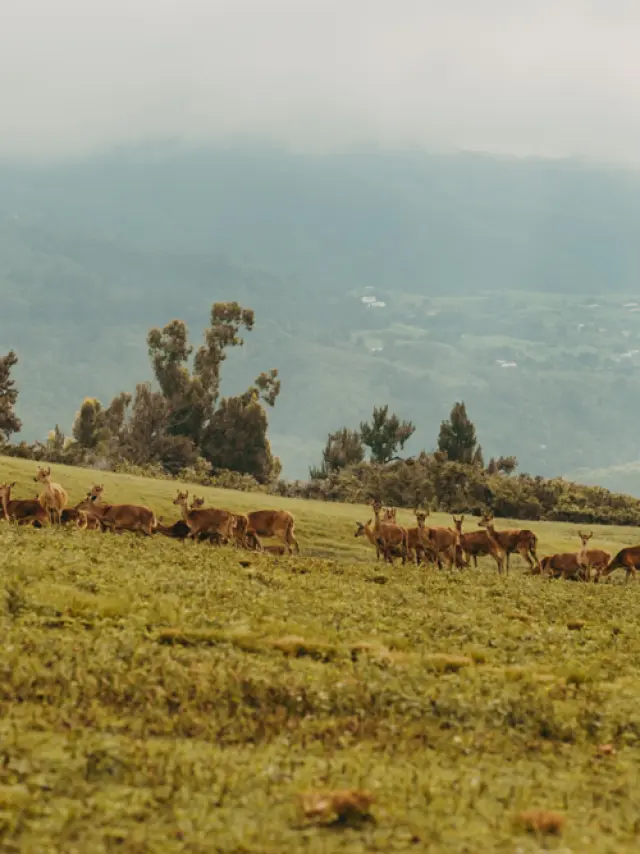
And yet, in the highlands of Sainte-Marie, nearly 400 deer live in the open on about 100 hectares. They cross ravines, disappear into the underbrush, take shelter under trees, and keep their distance.

The deer remains a wild animal. And that is precisely what Yannick seeks to preserve.

He speaks of them with great respect, their power, their vigilance as a herd, and their sensitivity as well.

Here, the goal isn’t to domesticate them at any cost. Rather, the aim is to maintain a balance.

“He didn’t ask us to be here. It’s up to us to take care of him.”

Since the revival of deer farming on Réunion in 1987, Moka de Palmas has followed this same approach : respecting the animals’ natural rhythms and working with life, not against it.

No antibiotics. No intensive farming. No pursuit of yield at any cost.

A different approach to livestock farming

In Moka, the deer are fed exclusively on grass. The terrain provides them with plenty of space : rolling hills, ravines, and shaded areas where they can take refuge.

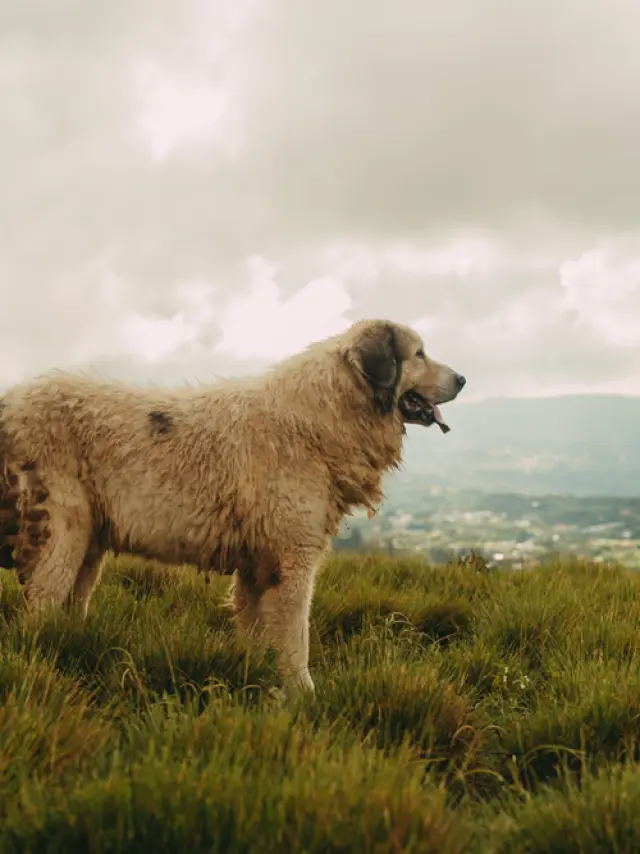
And all around Yannick, his large white dogs silently watch over the herds.

It quickly becomes clear that, for him, livestock farming goes far beyond mere production. It’s a daily life built around the presence of animals, observation, and the long term.

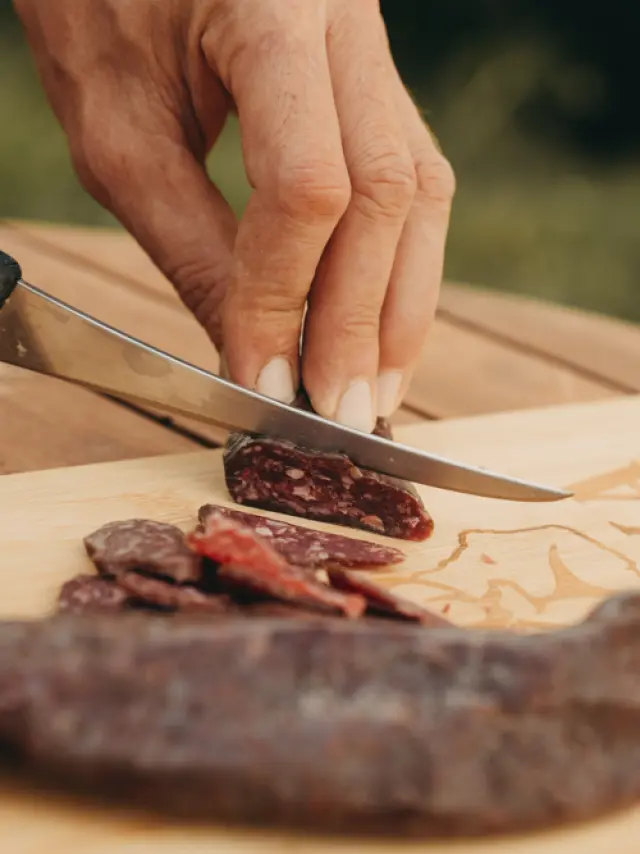
Over the years, the farm has also developed a direct-to-consumer sales program for venison, offered on an occasional basis, depending on availability. And a line of charcuterie, free of nitrites and preservatives, can be found at select partners, specialty food stores, and wine cellars.

The goal is simple : to show that, in Réunion, venison can be enjoyed in ways other than the traditional stew or at festive meals.

Today, some chefs in Réunion prepare it as tartare, carpaccio, tataki, or “crying tiger.” It’s a delicate, tender meat, often a far cry from the image of strong-flavored meat that many still imagine.

“Quality over quantity”

At a time when Réunion imports a large portion of what it consumes, Yannick sees a simple responsibility in his work: to do his part. By producing locally, even on a modest scale, but doing it well.

To bring high-quality Réunion meat to market. But without ever forcing nature.

“It’s quality over quantity. ”

If there’s not enough meat, there isn’t enough. We don’t push the animals. We don’t force the pastures, the seasons, or the climate.

We work with what the land allows.

In Moka de Palmas, there are deer, of course. But above all, there is this quiet conviction : some things deserve to be given time.

Time to raise them.

Time to observe.

Time to share the knowledge.

GOURMET PORTRAIT

If I were...

A Reunionese dish

A Rougail graton

A terroir product

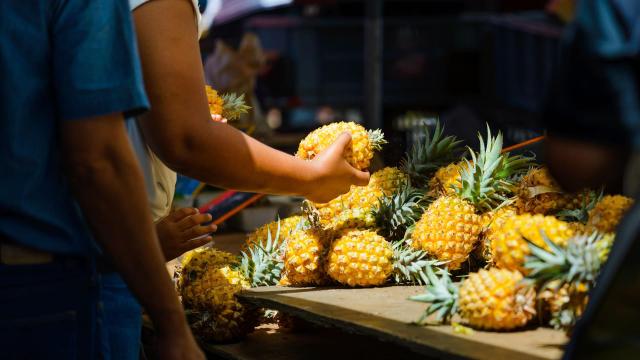
A Victoria pineapple

A spot for self-indulgence

Snack dan ex Edwige in Saint-Denis

Discover all our portraits